Kuwait Seizes Hundreds of Bitcoin Miners in Residential Mining Bust
영어 원문번역 보기
글자 크기본문 읽기 ↓
이미지 불러오는 중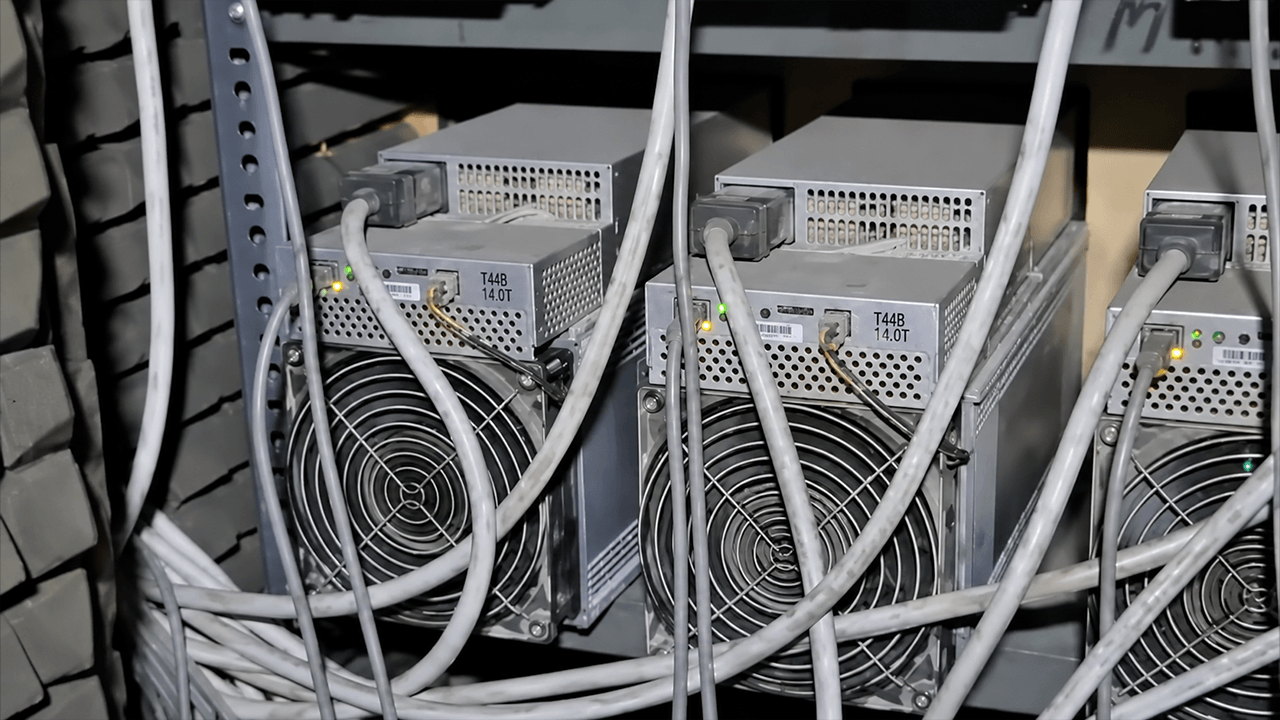
Kuwait seizes 362 bitcoin mining machines across five homes as authorities target underground operations exploiting subsidized electricity.
Key Takeaways
• Kuwaiti authorities confiscated 362 mining devices, five computers and five internet routers in Sabah Al-Ahmad.
• Official footage revealed conventional air-cooled ASIC bitcoin miners alongside sophisticated immersion-cooled installations.
• Kuwait’s 2025 mining crackdown reduced electrical demand in Al-Wafra from 85 megawatts to 36 megawatts.
Kuwait Uncovers Sophisticated Crypto Mining Operation Across Five Homes
Kuwait’s Criminal Security Sector, acting through the Ahmadi Governorate Investigation Department, launched the operation after receiving information that a Kuwaiti citizen was conducting prohibited bitcoin mining activities inside residential properties in Sabah Al-Ahmad.
Regional reporting detailed that investigators searched five homes, discovering hundreds of mining machines alongside computers, networking equipment and extensive electrical infrastructure. According to the Interior Ministry, the suspect admitted to operating the installations and was subsequently referred to the appropriate authorities for legal proceedings.
Footage published by the ministry on X revealed an elaborate mining operation featuring both conventional air-cooled and immersion-cooled application-specific integrated circuit (ASIC) machines. The approximately 61-second video showed rows of rectangular mining units equipped with large cooling fans, alongside tanks containing submerged hardware illuminated by green status lights.
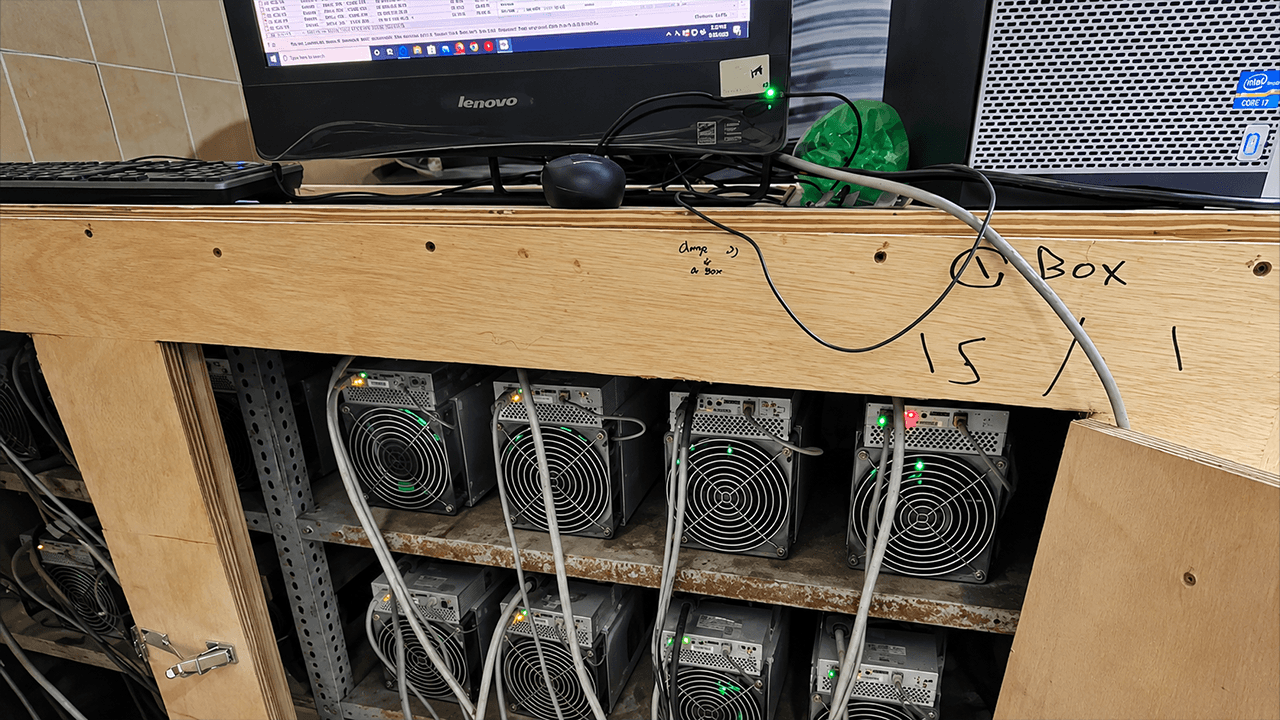
Image source: Upscaled screenshot of Kuwait’s Criminal Security Sector video footage on Nov. 29, 2026.
Immersion-styled ASIC cooling involves placing electronic components in electrically nonconductive liquid, allowing heat to dissipate more efficiently than conventional air-based systems. Such installations are generally associated with industrial-scale mining rather than casual residential operations.
However, Kuwaiti authorities did not disclose the equipment manufacturers, bitcoin mining machine specifications, collective hashrate or estimated electricity consumption. Several extremely dusty machines bear factory markings indicating a hashrate of 14 terahashes per second (TH/s) per unit. This suggests the residential operation housed a diverse array of sophisticated immersion-cooled bitcoin mining infrastructure alongside aging air-cooled machines resembling 14 TH/s Antminer S9 models.
Kuwait’s Cheap Electricity Fuels Underground Mining Operations
Kuwait has prohibited all types of cryptocurrency mining since July 2023, when the country’s Capital Markets Authority introduced sweeping restrictions governing virtual assets. The regulatory framework imposed an “absolute ban” on digital asset mining infrastructure, alongside significant restrictions on crypto payments, investments, and related commercial services.
Authorities introduced the measures within the context of compliance with Financial Action Task Force (FATF) standards addressing money laundering and terrorist financing. Nevertheless, Kuwait’s exceptionally inexpensive residential electricity has created a powerful economic incentive for clandestine mining operations. Government subsidies have historically kept electricity prices for Kuwaiti citizens at fractions of a U.S. cent per kilowatt-hour.
Electricity represents one of the largest recurring expenses for bitcoin miners, making access to subsidized power particularly attractive. Kuwait’s extreme summer temperatures, growing electricity demand, and infrastructure constraints, however, have placed unauthorized mining operations in direct conflict with national energy priorities.
Kuwait’s 2025 Mining Crackdown Saved Millions in Electricity Costs
The latest seizure follows an extensive enforcement campaign launched between April and May 2025, when Kuwaiti authorities identified more than 1,000 suspected cryptocurrency mining locations nationwide. Approximately 100 homes in the southern Al-Wafra area exhibited abnormal electricity consumption, with some properties reportedly consuming 20 times more power than ordinary households.
One residence recorded consumption exceeding 100,000 kilowatt-hours during March 2025 alone. Smart-meter readings helped investigators identify properties maintaining unusually consistent electrical loads throughout the day and night, a consumption pattern characteristic of continuously operating mining equipment.
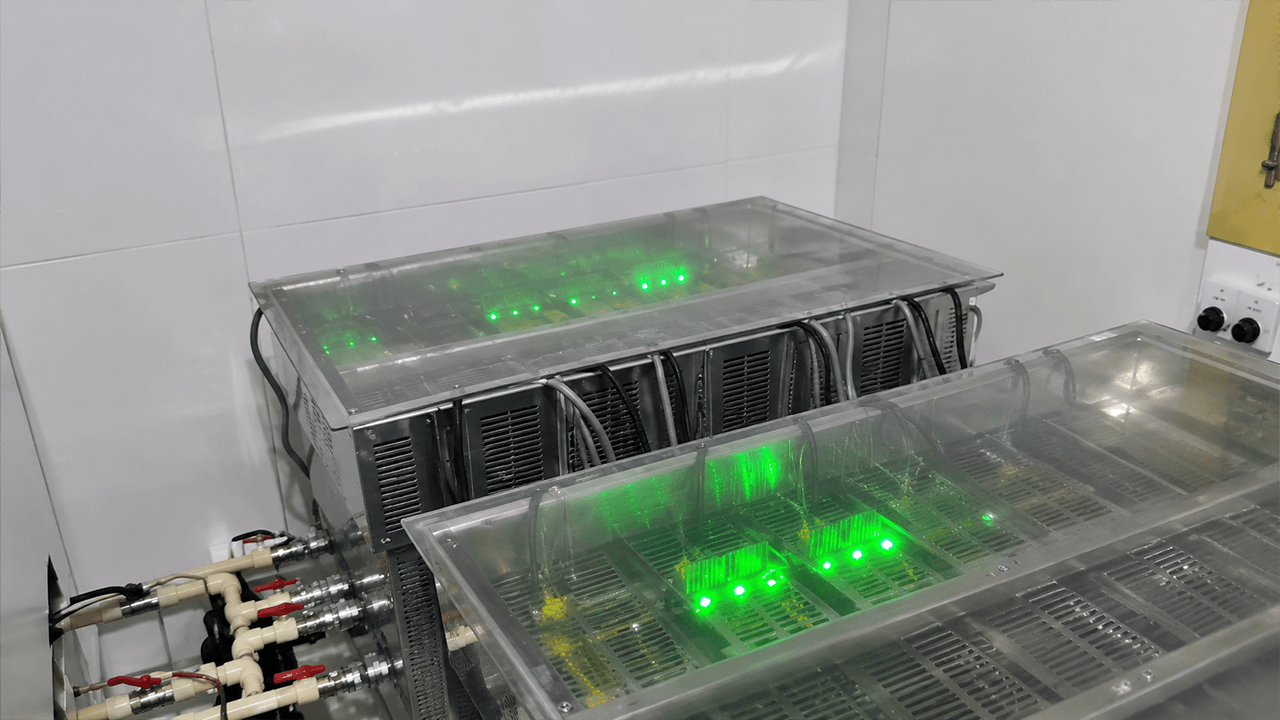
Image source: Upscaled screenshot of Kuwait’s Criminal Security Sector video footage on Nov. 29, 2026. Immersion-cooled miners can deliver between 200 TH/s and 1 petahash per second (PH/s), depending on the manufacturer and model.
Following enforcement operations, electrical demand on Al-Wafra’s main transformer fell from 85 megawatts (MW) to 36 MW, representing a reduction of approximately 57.6%. Officials estimated annual electricity generation savings of roughly 15 million Kuwaiti dinars. The broader investigation eventually encompassed 116 individuals across 31 cases involving 59 properties.
At the time, authorities disconnected electricity supplies to implicated residences, requiring Interior Ministry clearance before services could be restored. In July 2025, authorities arrested another Kuwaiti citizen operating mining equipment inside a rented Sabah Al-Ahmad residence. The individual admitted to concealing the machinery during the earlier enforcement campaign before resuming operations approximately two weeks before his arrest.
Kuwait’s Mining Prohibition Faces Legal Complications
Despite the extensive regulatory restrictions, Kuwait’s enforcement campaign encountered a significant legal complication in February 2026. A criminal court acquitted defendants involved in an earlier mining case, finding that bitcoin mining had not been sufficiently criminalized under the statutory provisions invoked by prosecutors.
The decision did not invalidate the 2023 regulatory prohibition but exposed limitations surrounding its criminal enforcement. As of Nov. 29, authorities had not publicly identified the latest suspect or disclosed specific charges, potential penalties, or subsequent court proceedings. The video footage, however, shows a handcuffed individual standing beside racks of air-cooled bitcoin mining machines.
The discovery of hundreds of mining machines across five residences illustrates the persistence of underground cryptocurrency mining despite years of enforcement. Kuwait faces a dilemma rooted in its own electricity pricing structure: The same subsidies designed to benefit Kuwaiti citizens create compelling financial incentives for energy-intensive mining, while unresolved questions surrounding criminal liability complicate efforts to eliminate the practice.